wythall radio club

having fun with RF
Subscribe

A Tale of Two Keys by Chris Pettit and a successful CAD collaboration by Neil G1TZC

April 17, 2026 By: john daws Category: Club

A TALE OF TWO KEYS BY CHRIS G0EYO

“It was the best of times, it was the worst of times, it was the age of wisdom, it was the age of foolishness”.

I hope lovers of Dickens will forgive my misappropriation of his famous saying but this is a story of two apparently identical morse keys purchased at different auctions, where wisdom may explain the reasons for their apparent differences, but foolishness probably resulted in me buying them in the first place.

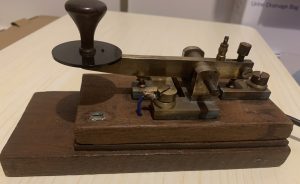
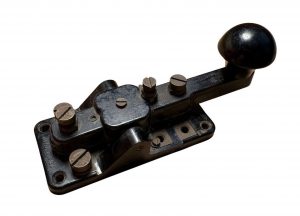
Early last year I wrote a piece about the Great Northern Telegraph Company (GNTC) morse key, its origins and the part it played in the development of world-wide communications. This is the key in question.

Figure 1: First GNTC key (a.k.a. The Danish Key)

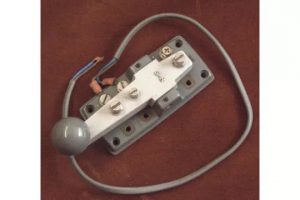
The underside view (see Figure 3) shows spade terminals which enable it to be plugged into a terminal board or another associated piece of morse equipment known as an undulator which enables the operator to keep a visual record of the received morse and read it later.

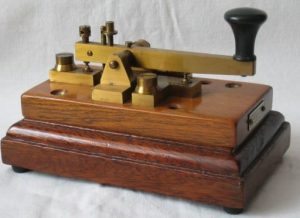
In 2025 I purchased a Lot of five morse keys at an auction in Bedfordshire. Amongst them was this apparently identical GNTC key.

          Figure 2: Second GNTC Key

                                                                                     These Scandinavian keys are sometimes known as Swedish Pump, Copenhagen, or Danish keys. Most are large keys with long levers and the contact at the rear of the key, furthest away from the knob. They are designed to be fixed to a desk or plugged into another piece of equipment to keep them stable. They are quite smooth to operate.

In the previous article I had established that originally the key was manufactured in Copenhagen and could be recognised by the number “605/606” impressed on the underside of the Bakelite base to identify the moulding pattern. The first key I purchased was manufactured under licence by Morse Equipment Ltd, of Tring, Hertfordshire in the UK and possibly manufactured by Sedgewall Communications Group in the 1960/70’s. I thought it would be useful to identify the differences between my two purchases. To make things a bit clearer I will identify my first (and original) purchase as: Key 1 and the second (and more recent one) as: Key 2


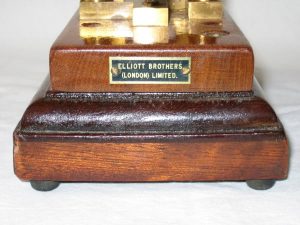
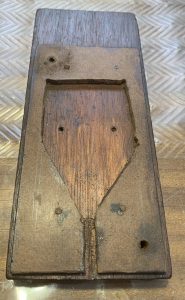
         Figure 3: Underneath View Key 1


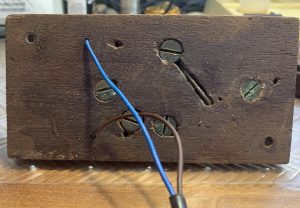
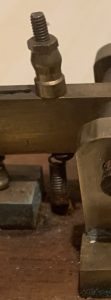
        Figure 4: Underneath View Key 2


 DIFFERENCES

External appearance

1. Key 1 has a Morse Equipment Limited and Serial Number label, whereas Key

shows no sign of ever having had a label.

2. Key 1 does not have skirt under the knob, whereas key 2 does. Most examples of

this key in other people’s collections show it without a skirt. I surmise that Key 2,

the later key, had the skirt as an option. It looks genuine.

Internal appearance

1. Key 1 looks to be a better quality of manufacture. Metal parts are plated,

whereas Key 2 metal parts are not bright.

2. Both Bakelite mouldings have the same pattern number in the same place

stating:

a. 605/1X

b. 606/1X

3. There is a paper label on the inside of Key 2 stating SEDGEWALL plus the number

9621020004, there is no such label on Key 1.


4. Key 1 has four Spade terminals which are wired up to the key contacts, whereas

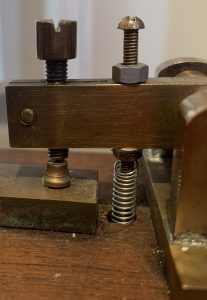
Key 2 uses threaded screws and nut fixings wired up to the key contacts and towhich the morse plug cable is also wired. These look to be professionally done rather than modifications carried out by an amateur, that is you can’t see wherethe spade terminals would have been on Key 2.

5. Both keys have an access slot in one end to allow a cable to be fed through to the connections. This would not have been required when the spade terminals on Key 1 were used in conjunction with a separate terminal interface board (which was shown on the earlier article).

Clearly from the early evolution of this morse key when it was manufactured by the Great Northern Telegraph Works in Copenhagen, then under licence by Morse Equipment Limited of Tring, it underwent changes. Was this because of specific applications, markets or availability of materials? To try and find out more, I decided to research the company Morse Equipment Limited and its sister companies, Teleprinter Equipment Limited and Communication Accessories Limited.

An advert from Wireless World, May 1973, (reproduced in the previous article), showed that each of these companies traded from the same address; 77 Akeman Street, Tring, Herts. An associate company Morse Equipment (Military) Limited was incorporated in 1994 and in 1996 the company moved to the Apex Business Centre in Dunstable from Akeman Street. The company was finally dissolved in 2010. I have not been able to discover anything which clearly defines the business relationship between the Great Northern Telegraph Works, Sedgewall Communications Group or Morse Equipment Ltd. Were Sedgewall contract manufacturers for Morse Equipment Ltd? All these businesses were in communications equipment manufacture and supply. Great Northern became GN Store Nord A/S and today the group consists of GN Store Nord A/S, GN Hearing A/S, and GN Audio A/S. GN develops and manufactures intelligent hearing, audio, video, and gaming solutions. Sedgewall is a sub-contract manufacturer of electronic and electro-mechanical products and operates within the defence, intelligence, aerospace, maritime and emergency services sectors.

KEY CONSTRUCTION

All straight keys have screw fixings which can be adjusted to give the required spacing between contacts; one on the lever arm (aka the hammer) and one on the base or frame (aka the anvil). There is also another screw which adjusts the tension of the spring that opens the contacts when the key is released. These settings can be adjusted to suit the operator’s preferences. Most straight keys have their contacts and screws fully exposed, although many keys used professionally would probably have a separate cover to prevent tampering and the ingress of dust.

The GNTC key is different in a couple of ways. First everything is housed and mounted in a Bakelite cover. A knurled metal knob which sits under the key arm adjusts the tension on a horizontal spring connected to the lever arm. Turning the screw clockwise increases the tension on the spring, turning it counterclockwise does the reverse. A vertical plastic smooth knob at the front of the key covers a brass slotted screw which has the upper contact on one end. This is used to adjust the contact gap. You set the gap using a screwdriver on the screw. Once set, you turn the plastic knob to “lock” the brass screw in position. Pressing the key down causes the lever arm to raise and close with the upper contact, thus completing the electrical circuit.

 WHAT NEXT?

Not being able to find out anything more about the development or history of the GNTC morse key and its successors, it was time to decide what I was going to do with this duplicate key. I am attracted to keys which have been used professionally, and Key 2 is a nice key but, if it is not going to be fixed to a desk it needs to be mounted on a base or platform, to keep it stable on the desk. I also thought that with such a long keying arm, it may benefit from a base that extended under the arm to prevent it from “tipping” under a heavy-handed fist!

WRC member Neil G1TZC had already designed and manufactured a 3D base for an old Marconi Marine 365 morse key and offered to do the same for this key. We exchanged sketches and ideas, and he came up with the proposal below in less than 24 hours. It took less than one hour to draw using OneShape, an online 3D package and 7 hours to print.

               Figure 5: Neil’s 3D design


Neil explains his strategy for this project.

“This project was built from the bottom up. So, the base section was initially a 200 x 90 rectangle sketch. Then radius off the corners at 10mm. Then you extrude that. Chris wanted a 10mm block at the front, so I went with that for the whole of the base – this is where the whole 3D thing comes in. Inside the box he only wanted 5mm for the base, but with 3D you think beyond the old way of drawing. You add another block the size of the key footprint which was 140 x 90. Again, radius the corners at 10mm. This gets you to a block on a block. Then a lip to sit inside the key to stop sideways movement. This was 130 x 80, to give a 5mm lip all round. Then comes the neat bit. You can extrude backwards. That gives you the open box. Add a couple of screw posts to hold the key in place and you are done. A 45-minute project. It is being printed as a high-quality finish. This takes much longer to print and uses far more plastic but still works out at only about £3 material cost.”

Neil did a great job on this base and the smooth finish blends in nicely with the key to make it look right, even though it is not possible to get a high gloss finish with 3D printing. The next part of the project was to fit the lead weights in the new base. I chose weights which are used on vehicle wheels for balancing (available from Amazon). They come with a self-adhesive backing so affixing them to the base was easy and I found that I had room for weights totalling 800g. This gave the key a real solid feel to it which promised to remain rock solid even in the hardest of key pounding.

    Figure 6: Key mounted on 3D Base


After trying out the key for a few QSOs, I became concerned that, at a height of 71mm, the position of the knob would mean that the operator’s arm would not be comfortable for long term use. In the event, further testing over a few days confirmed that this wasn’t a comfortable height. So, we entered phase 2 of the design.

3D BASE PHASE 2

I asked Neil to reduce the base height by 10mm. I wouldn’t have so much depth to fit all the weights but experimenting found that three layers of weights at 600g was possible. At the same time as reducing the height of the base, I decided that the front stabilising platform was also not necessary and spoilt the overall look of the key. I asked Neil to remove this at the same time as adjusting the height. In the end Neil came up with a height reduction of 9mm which avoided a complete redesign.

             Figure 7: Neil’s 2nd 3D Base


With original GNTC key fitted (no knob skirt), it looked excellent, so weights were fitted to this one and the key was put through its paces over a few days. After a while it became apparent that, for me personally, the key was more comfortable to use with a skirt under the knob, which Neil was kind enough to also produce on his 3D printer

     Figure 8: Mounted on 2nd 3D Base


This seemed like a good time to review where we had ended up. We had two pretty much identical keys. One with a higher base and a stabilising platform and one with a lower base but no stabilising platform. Neil kindly offered to produce a third base, and it was now time for me to decide as what it should be. After much deliberation, I decided that I wanted to end up with two bases both of similar height but one with a stabilising platform and the other without.

            Figure 9: The Final Result


Both keys are comfortable to use, although I am not an experienced enough as a “telegraphist” to have long “rag-chew” QSOs with experienced operators. Originally, being professional keys, they were designed for long term use and are easily adjustable to suit the operator’s requirements. What shall I do with them? Well, I have no idea of their true value and I have invested some cash in them, so I think I will keep them safe and bring them out on those occasions that call for a bit of vintage CW with the other “old fist thumpers” out there.


73 TU dit dit.

de Chris G0EYO


Jamie M0SDV at Wythall Radio Club

April 12, 2026 By: john daws Category: Club

Wythall Radio Club were delighted to welcome back former member Jamie M0SDV to talk about his Solo DXpedition to Grenada: not only that but he’d only just returned the day before from a gruelling trip to Bangladesh operating in a multi -operator expedition as SD21WD

There are surely few  solo DXpedition operations given the logistical demands but Jamie was well up to the challenge and his meticulous planning and execution resulted in an outstanding result in the CQ WW DX CW at the end of November- one of the incentives for this project

 Once arrived on the Island via St Lucia, (an 11 hour flight ) getting the hire car, driving through narrow country lanes to his north of the island  location Jamie prepared the shack for operation.

Solo erection of the antennas  went well  next morning  (a 5.30 a,m. start) until the 18m Spiderbeam pole challenge when a gust of wind caused some problems but with the help of a lone gardener on site the situation was rescued!

The week before the contest was spent with sight seeing, eating the local  food and generally doing the tourist things but also making many QSO’s before the start of the contest at the end of the week

This was Jamie’s final Youth Overlay entry in the CQ WW entry and he claimed the North America Youth record and the Grenada single -op high power record.

In the contest-6,249 QSO’s and scored over 9 million points in the single op all-band entry category


This was a fascinating account, much enjoyed by all members, of a real adventure showing the resilience and resourcefulness of Jamie.

  Our appetites were further whetted by news of a possible M0SDV trip to Ascension Island later in the year.

COMING SOON ON THE WEBSITE

1.A TALE OF TWO KEYS BY CHRIS G0EYO

2.THE EASTER CONTEST RESULTS.


STOP PRESS: Behind the scenes of solo dxpedition!

April 01, 2026 By: Chris G3YHF Category: Club, Fun, News

You can see behind the scenes of a solo dxpedition at Wythall Radio Club next Tuesday 7th April at 8pm. 

Visitors are very welcome.

Jamie M0SDV will be talking about his visit to Grenada island as J38W where he made an average of over 1,000 qsos a day. 

The talk will cover the planning and equipment used for this solo dxpedition as well as the operating and day-to-day issues when using this new location. 

Jamie has just returned from 2 weeks operating with the S21WD group in Bangladesh, so this will make an interesting comparison.

The session will be in the Darts Room, Wythall House, Silver Street, Wythall – there is a location map here.


All Pi’d out at Wythall Club

March 28, 2026 By: Chris G3YHF Category: Club, Fun, News

alacarte, SAMBA – these may sound like they belong at a dinner dance…..

Instead, they are part of the world of the Raspberry Pi (RPi) – and material we covered in Wythall Radio Club’s recent 3 evening course.

Over 20 members and visitors packed out the Darts Room, our base at Wythall House. 

Ian M0LQY (photo) took us from first steps with a RPi through networking with a Windows PC to connecting the Pi to manage our radios.

In the final week Ian gave us a live demo of how to compile software, using popular digital mode programmes as examples.

There were lots of questions and discussion, and some attendees brought along radio applications they were using with their RPi.

From discussions in the bar afterwards, it was clear that once you have one Pi it is never enough!  Some owners had 4 or 5!

Many thanks to Ian for an excellent and accessible series of talks, giving us the basis for lots of computing experimentation to fill the time as we head into the summer duldrums on HF!


Friday Fun on 6 and 2!

March 20, 2026 By: Chris G3YHF Category: Club, Fun, News

High pressure and early mist – maybe there will be some enhancement on 50MHz and 144MHz today?

So at Wythall Radio Club’s ‘Third Friday Club’ we plugged in a FT857 and connected the 6 and 2 beams. 

Nothing doing on SSB so we added the Signalink to see if there was any FT8 activity.

Lots of PSKreporter spots on 6m, with +1db from Sweden and -9db from Denmark – nice!

But enhancement seemed very sporadic as we only managed digital QSOs with Nick M1DDD/P in Derbyshire on 6m and Steve G1PYT in Stourbridge on 2m.

Many thanks to Steve and Nick for coming on with such a quiet band.

So always CQ on a quiet band – you never know who might be listening!

Let’s see who we can work at our April ‘Third Friday’ event.


A Slice of Pi – free course on Raspberry Pi and amateur radio

February 11, 2026 By: Chris G3YHF Category: Club, Fun, News, Training

A 3 week programme covering:

  • How to get going with your Raspberry Pi
  • Connecting to your network and other computers
  • Compiling ham radio programmes from source code

Tuesday, March 10th, 17th, 24th 8 – 9.30pm,

Darts Room, Wythall House, Silver Street, Wythall B47 6LZ

with Ian Gilmore M0LQY

Free course, but please make a small donation towards room hire.

To reserve a place, e-mail us at: wythallradio@gmail.com

Most hams will have noticed that world of amateur radio is undergoing a transformation.  The analogue nature of radio design is rapidly being swept aside and replaced by digital designs.

Recent models by radio manufacturers are all based upon Software Defined Radio Technology (SDR) Better sensitivity, selectivity and filtering can be provided by software than would have been previously possible.  Even familiar meters displaying, power SWR, ALC etc. are created in software using TFT screens instead of older analogue meters.  

Additional information once fixed is now configurable according to operator preference. Electronics under software control is the new standard and there can be no going back.

A common trait amongst HAM’s is the desire to experiment finding new ways to improve the performance of our radios and whether this means designing and building circuits, constructing new antennas or finding innovative ways of controlling our radios is now possible using software. We routinely attach our radios to computers either to control, display information or to operate one of the many digital modes available to us.

Although many of us routinely connect our radios to a PC or laptop running Microsoft Windows this is not the only option. The Raspberry Pi is a real alternative. This is a true mini-computer that has become a favourite amongst licence HAM’s.

This remarkable device now on its fifth generation has become a truly powerful computer and unlike the closed nature of expensive Microsoft products it utilises software freely available to all and actively encourages users to experiment.

Taking full advantage of opensource software, you can learn to program and develop controls to support your own projects. Many of you may already have discovered this marvel and want to extract maximum value from it.  Alternatively, you maybe are thinking of giving it a try or just want to know more. Well, we can help!

For those with an interest in learning how to get going with a Pi then this is your chance.

Wythall Radio Club is hosting a series of workshops beginning in March which will guide and advise members on buying, powering and connecting peripherals.

The workshops will guide you through the process of setting up a new installation and installing key Ham Radio programs. Hopefully, we will dispel many of the myths about complexity, the command windows or other unfounded rumours which are often heard.

Later sessions will progress into networking and connecting to other computers running windows or other Unix based systems such as Apple Mackintosh.  Another issue we will cover is Unix permissions which often confuses new users.

We will look into compiling programs from source code which is something that is a very useful skill since some applications are only distributed as source code. Some of you may want to go on to write your own programs or just want to improve your skills or understanding.

The Raspberry Pi is an ideal platform for Radio Hams to develop skills to further your knowledge of software-controlled electronics. Additionally, the Pi is excellent at performing more traditional computer tasks.

A Ham wanting a small computer for field days, running a local hotspot or controlling your radio then the Raspberry Pi is for you. The Pi is a real computer that can be used for all of the traditional tasks expected of a PC whether it is email, writing documents or keeping a  spreadsheet.

Come and join us in March and begin your Raspberry Pi Journey. Who knows where it will lead you to. 


Fun evening with local Scouts

February 03, 2026 By: Chris G3YHF Category: Club, Fun, News

‘You mean it’s not connected to the internet?’

‘Is it encrypted?’

‘How far will these signals go?’

‘You built a satellite antenna using a tin can?’

Just some of the questions from Wythall Radio Club’s Communications Evening with 1st Tidbury Green Scouts.

What can you do with 30 keen Scouts in a 2 hour Friday evening session?

We wanted to give them a hands-on experience. 

Our solution was to rotate each patrol of 6 or 7 scouts around 4 activities.  A Scout leader went with each group so they could assist and also see each of the activities.

We always have a lot of success with ‘old school’ technology! 

In this case, it was giving each Scout the opportunity to send their name in Morse code, to be decyphered by other Scouts.  John M6KET used the Club’s CW gear plus his K2 in ‘test’ mode and soon dots and dashes were being sent from one end of a long table to the other end.

On the other side of the hall, the ‘beeps’ of licence-free handies could be heard.  Chris G3YHF ran a session in which Scouts used the phonetic alphabet to spell out messages, to be received and translated by their colleagues at the other end of the hall. 

Having mastered this, our 70cm repeater GB3WL was accessed and two of our Club members – Simon G4TVR and Martin G8VXX – spelt out their names, with the Scouts reciprocating. 

They were excited to discover that Martin was operating from his narrow-boat.

Over in neighbouring Wythall House, digital sounds were emanating from the Darts Room.  Ian M0LQY  demonstrated how far his HF FT8 signals could go, and showed ways in which a computer-linked transceiver could be utilised. 

Meanwhile, Neil G1TZC had his satellite station on-air and the Scouts had the opportunity to pass greetings messages with stations around Europe.  They also leant about WebSDR if they wanted to do some SWLing.

Fortunately the Scout Hut is next to Wythall House, our Club’s HQ.  We’ve learnt from experience running sessions for Cubs and Beavers that the large Scout Hall doesn’t absorb sound!

We were fortunate to obtain GB1TGS (1st Tidbury Green Scouts) as our special event call.

Each Scout was awarded the Communicator Badge at the end of the evening and a Certificate of Achievement from Wythall Radio Club listing what they had done.

Our Club team thoroughly enjoyed the evening and the Scouts were a delight to work with – keen, engaged and asking smart questions.

We’re looking forward to more engagement with our local Scouts!

See some of our previous activity with the Scouting and Guiding community….

Beavers 2023

Scouts 2020 A

Scouts 2020 B

Beavers 2019

Guides 2018

Scouts and Beavers 2018

Tanworth Scouts 2018


Tags:

STOP PRESS: Guide to using multimode GB3WL repeater

January 28, 2026 By: Chris G3YHF Category: Club, Fun, News

David G7IBO has taken time off from building high grade test gear to write this easy-to-follow guide to using GB3WL’s new multimode functions.

If you’ve never used C4FM, D-Star or DMR, this will help!

The Guide is also available on the GB3WL web page.

And here’s some info on GB3WL’s upgrade!


2025 XMAS CONTEST AWARDS EVENING

January 26, 2026 By: john daws Category: Club

A good turn out the other week for the Results and presentations for the Wythall Radio Club Xmas Contest.

Smiling and expectant faces at Wythall Radio Club recently as they await the results of the 2025 Xmas Contest. 

Lee G0MTN reported that:

The contest had seen increased activity.

 Some unusual modes and bands had been used.

GB3WL had provided new digi connectives.

GB3XO and Echolink had been used to good effect ( Warsaw and Amsterdam airport?!)


Ian M0LQY receives the All Modes award from Lee

Mike G4VPD (a serial winner?!) receives the 2m/70 cm award from Contest organiser Lee G0MTN

THE RESULTS : 2m/70cm Section 

3. Juliet M6RSC

2.Neil G1TZC

1. Mike G4VPD


All Modes

3.Chris YHF

2.David G7IBO

1.Ian M0LQY


COMING SOON – A FULL REPORT ON THE COMMUNICATIONS EVENING FOR THE TIDBURY GREEN SCOUTS  AND THE OPEN COMMITTEE MEETING ON FEBRUARY 3RD 8.00 P.M. THE DARTS ROOM


Work the world via GB3WL repeater

January 21, 2026 By: Chris G3YHF Category: Club, Fun, News

GB3WL now has been relaunched with full FM, D-Star, C4FM (Fusion) and DMR capability.

During the past year, the project to make GB3WL multi-mode has involved many Club members including Derek G1INC, Mike G4VPD, Ian M0LQY and David G0HVN.

Much testing and reconfiguring towards the end of 2025 enabled Club members to use all the available modes during the Club’s annual Christmas Contest – and score those valuable ‘mode’ bonuses!

(Christmas contest results and highlights follow shortly!).

Our new ability to talk to other radio amateurs internationally via handhelds will be a great bonus for our public events locally.

For details of how to access GB3WL – click here – or see the ‘Repeaters’ tab on the web site.

If you cannot access the repeater, it may be in use with a mode your radio cannot receive – NB on FM, there is no ‘Bleep’.

And don’t forget to try our 2m SSTV repeater – MB7TW!