 RSGB News
Chris G0EYO continues the story of his historic (and growing!) Morse key collection….
To find Chris's previous Morse key tales, use our 'search' function.
This morse key was purchased, with others, from a Norfolk Auction house which allowed on-line bidding. With expenses, I paid £37 for it.
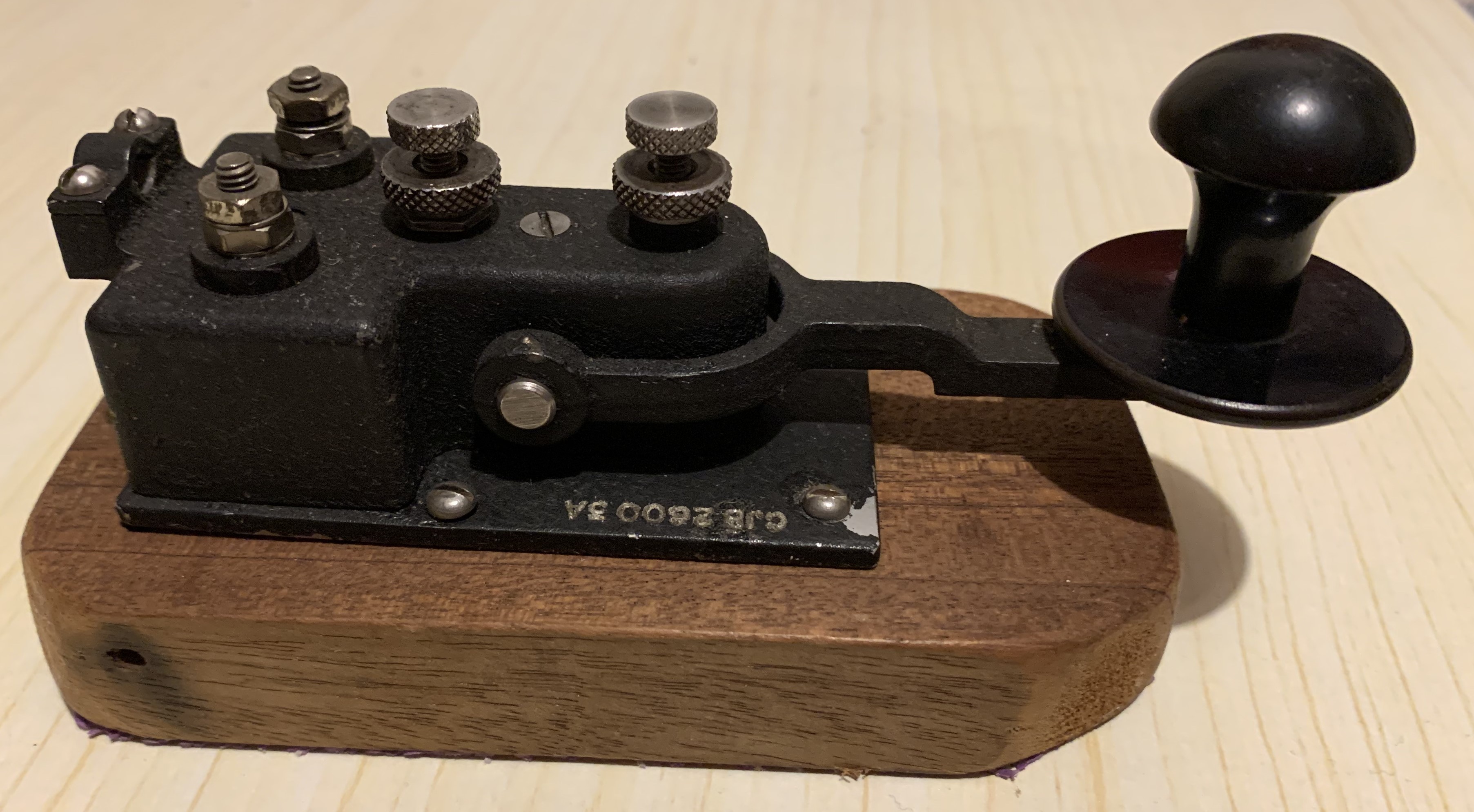
Also known as the Canadian or US Naval Morse Key it was manufactured by J.H.Bunnell of New York between the mid-50’s to the late 80’s. This is likely to be an early one. Prior to that it was also manufactured by several other manufacturers.
We know this is a Bunnell key by the designation.
- CJB: The manufacturer code for J.H. Bunnell & Co. of New York (other manufacturer prefixes include CTE for Telephonics, CMI for Moulded Insulator Co., and CMK for McElroy).
- 26: The military code prefix denoting a telegraph key.
- 003: Indicates the third model variant in the specific numbering scheme.
- A: Denotes a formal modification or revision to the original design.
Figure 1: Canadian Flameproof Morse Key CJB26003A
The key has been mounted on a wooden base (not original) and is missing the terminal cover which can be seen from the example below, a suitable replacement may be a new 3D printing project for club member Neil G1TZC).
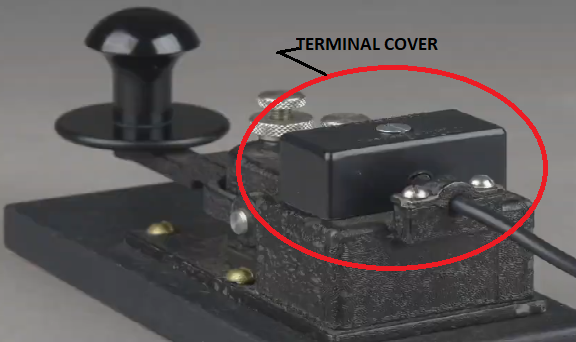
Figure 2: Example showing missing terminal cover
Designated “Flameproof”, it was primarily designed for use in Ships, Submarines and Aircraft, where any possible sparking from the key’s contacts could ignite explosive fuel vapours or flammable gases in confined spaces. Thus, the key contacts are sealed inside the metal box chamber situated under the terminal cover.
This chamber kept any sparks generated away from the operating atmosphere. In these days of modern amateur transceivers, when we key our solid-state transmitter, we are not switching significant voltages and currents.
When these keys were originally produced, the transmitter power amplifiers would have been very high-power vacuum tubes, and the keying voltages could easily be 50V or more. (See Note below on cause of sparking in electrical circuits.)
The tall, rounded knob fitted to the key is known as the “Navy knob” as it gives a taller grip than other keys and is said to be less fatiguing for those operators who don’t rest their arm on the table.
I have used this key in my daily contacts with John M6KET and find it quiet and comfortable to use, although its present wooden base has no weight and it moves around the desk (perhaps another weighted 3D base project for Neil, but see below).
The key has two adjustment screws; the one nearest the knob adjusts the contact gap and the other one sets the spring tension. Both adjustments can be locked with a knurled nut.
I haven’t dismantled this key but the cross-sectional drawing below, shows that the contacts are behind the pivot bearing which is unusual and is reputed to enable to operator to send a little faster than with a conventional straight key such as a Kent.
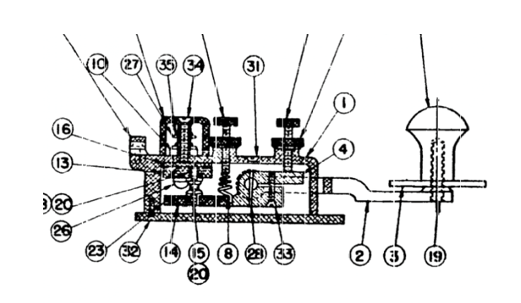
Figure 3A: Cross-sectional sketch of Navy key
On a previous article I had fitted a morse key to a base manufactured on a 3D printer by Neil G1TZC with some wheel weights to give it some stability. I thought I would use the same technique again, but this time with a small electrical enclosure box of about the right size for the base of this Navy key, which I had in stock.
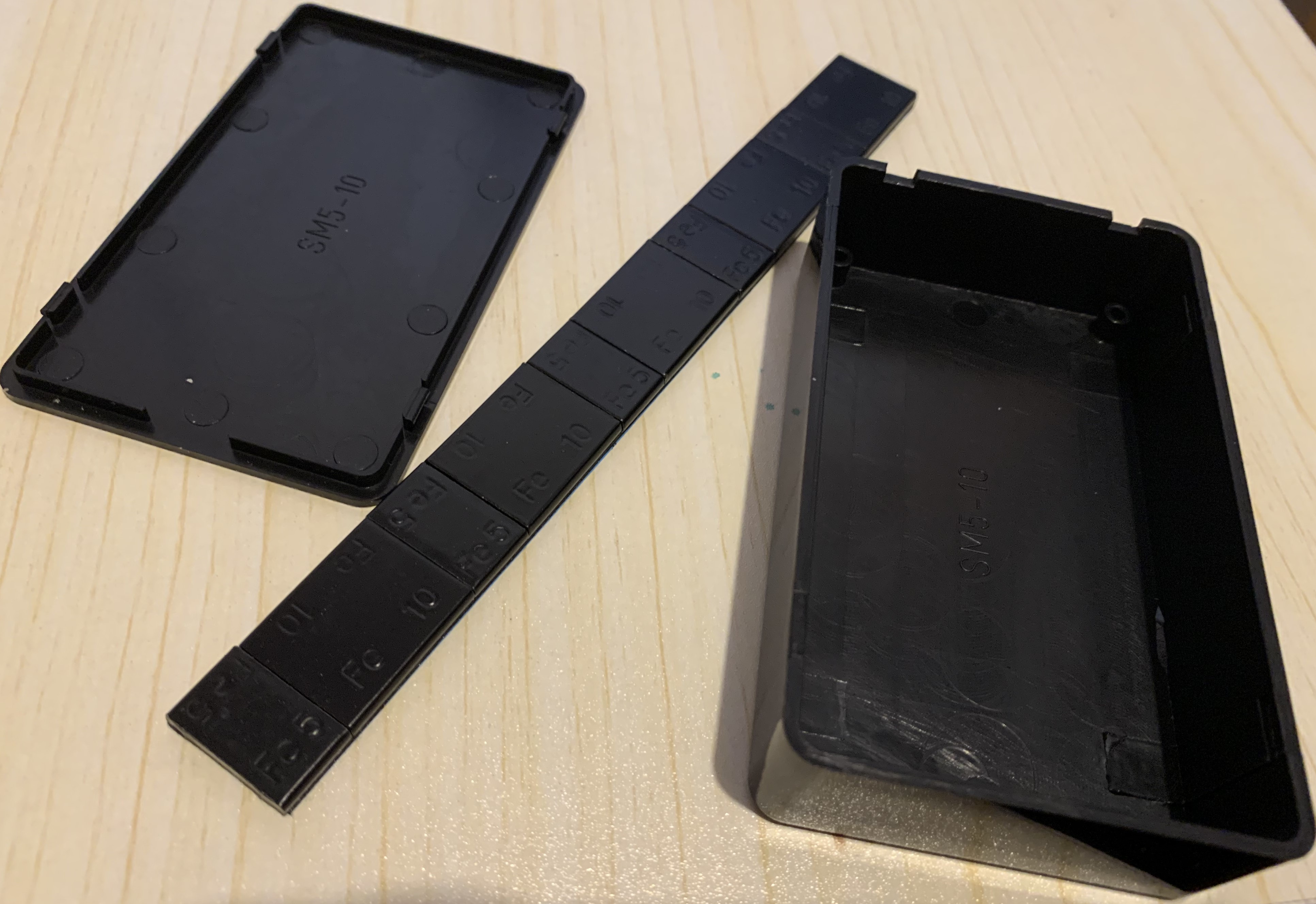
Figuire 3B: Base enclosure and wheel weights
I found I could get about 400g of black leaded weights in the box, the lid of which just nicely accommodated the Navy Key (see below).
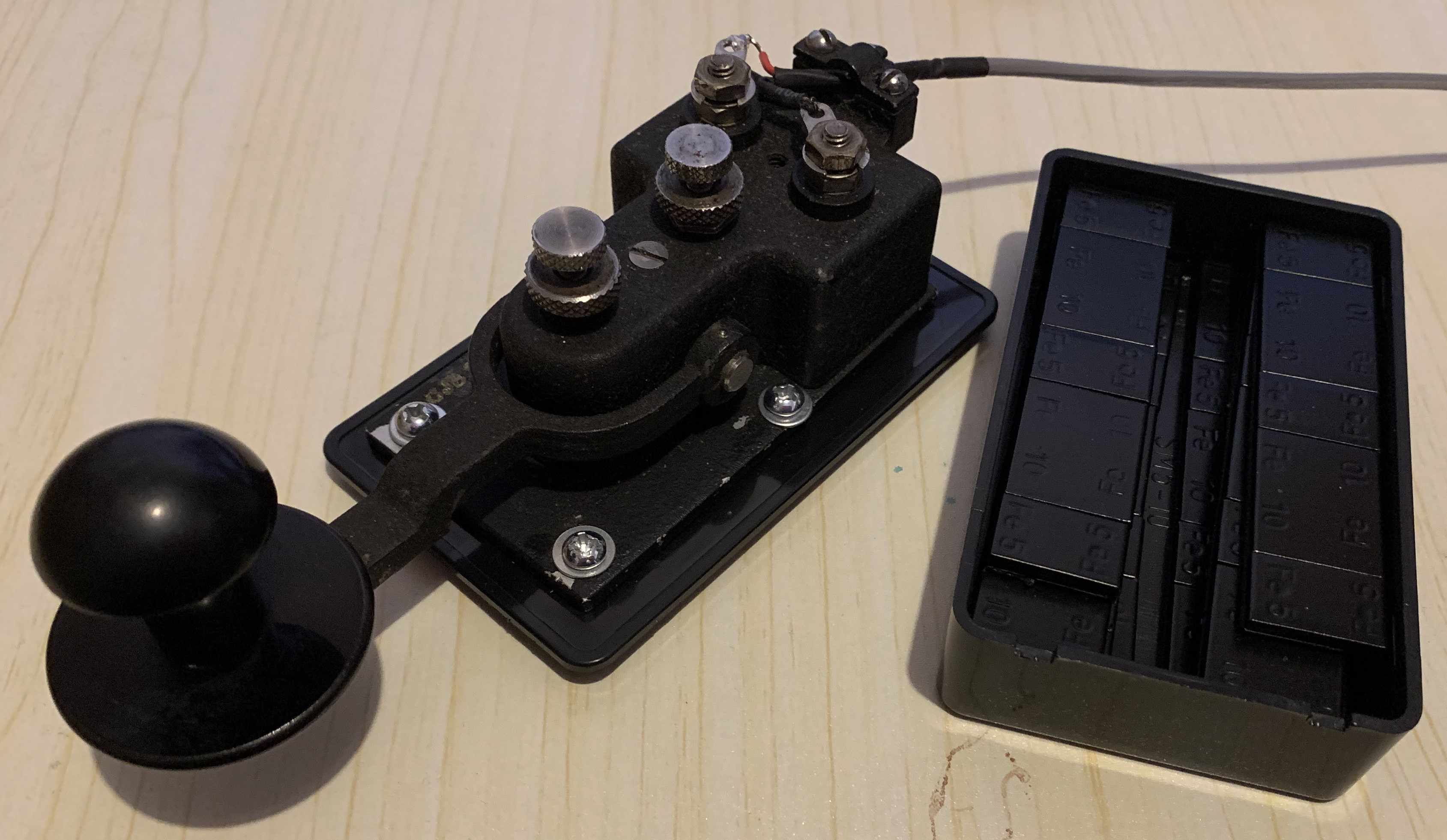
Figure 4: Key fitted to lid and weights in box
It looks quite smart as a complete unit and is much more stable when keying. However, it would be better if I had a base which also allowed for an area under the key knob to stop it slightly tilting when keying. In the meantime, I have put a bit of double- sided tape under the box to keep it firmly on the desk.
This U.S. Navy Type 26003A flameproof key, was widely produced during World War II and later became popular among civilian radio amateurs for its rugged design.
J.H.Bunell of New York, recently advertised some NOS (New Old Stock) of these keys for sale
at $100.00 each including Shipping and New York State Sales Tax. They soon sold out.
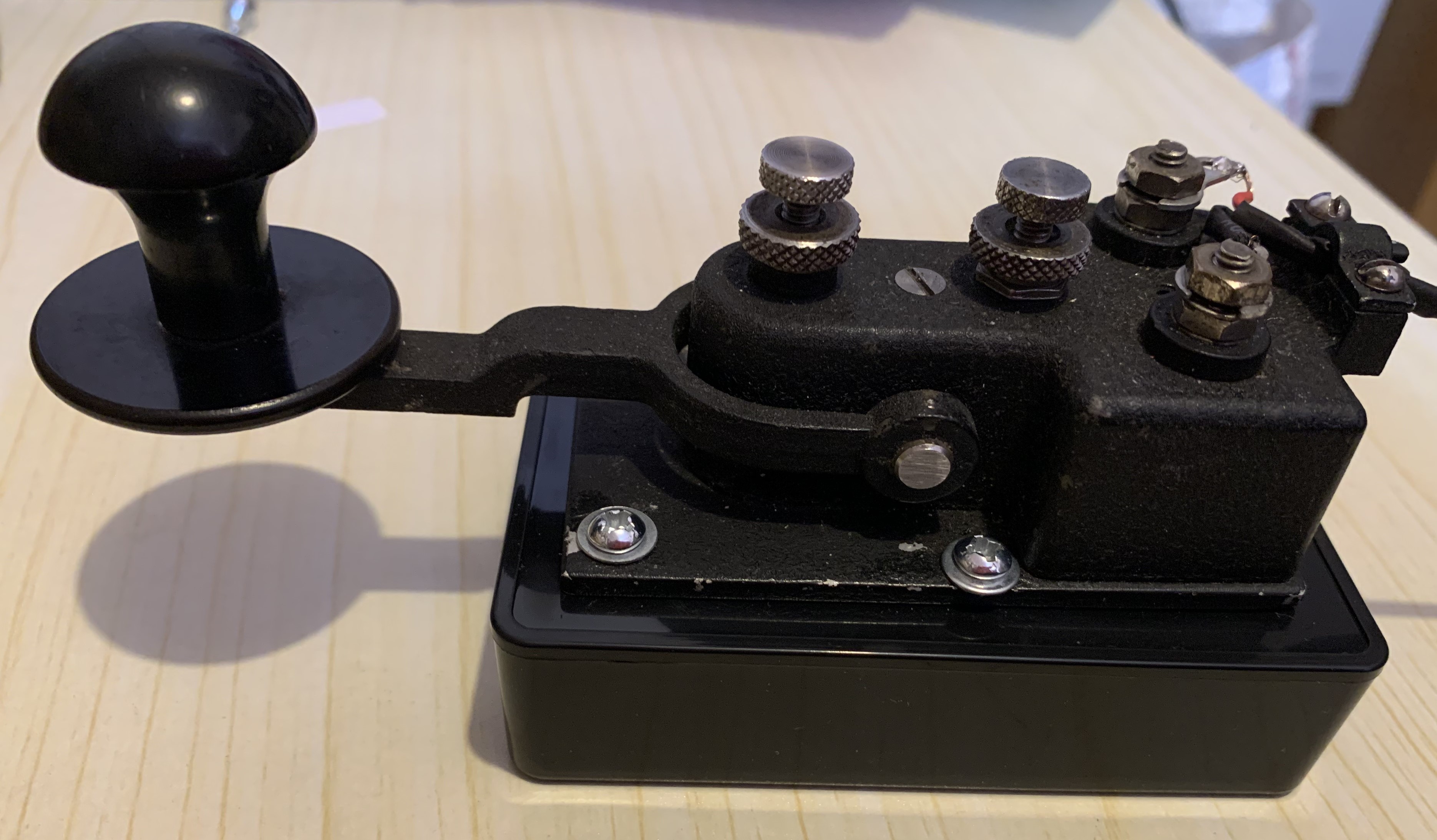
Figure 5: Finished key
Note 1: Why do you generate a spark?
You get a spark when you break an electrical circuit because the current flowing through the circuit is probably storing its energy in a magnetic field somewhere.
When you open the circuit, that stored magnetic energy collapses and tries to keep the electricity flowing (back EMF). The voltage across the contacts rises high enough to force electrons to jump through the air gap, (air breakdown), feeding the spark (theoretically, a glowing conductive plasma), until the gap becomes too wide or is extinguished by the contacts closing.
Note 2: J.H. Bunnell & Company
J.H.Bunnell and Company is a historic American manufacturer of telegraph keys, sounders, and electrical supplies founded in 1878 at the age of 35 by champion telegrapher, Jesse H. Bunnell, using his experience as a Civil War military telegraph operator.
He was innovative, and in 1881 his steel lever design replaced the traditional brass levers to reduce wear and improve durability for operators. By 1900, the company was considered one of the most prominent manufacturers of telegraph and signalling equipment in North America.
The firm became famous for producing rugged hardware, including our iconic Navy 26003A Flame Proof Morse keys described above.
Chris Pettitt G0EY0
16/9/26